 Naxos Boat Tours
What to Bring on a Naxos Boat Trip (and What to Leave)
What to bring on a Naxos boat trip is a longer question than a beach day asks of a backpack - nine hours of salt, wind, glare, a swim at every stop and a cold ride home. This is the list the boat reviews write implicitly: the non-negotiables first, the seasonal variations second, and the leave-at-home rules that keep the deck civilised, with each listing's own inclusions noted in the Naxos water-tour comparison.
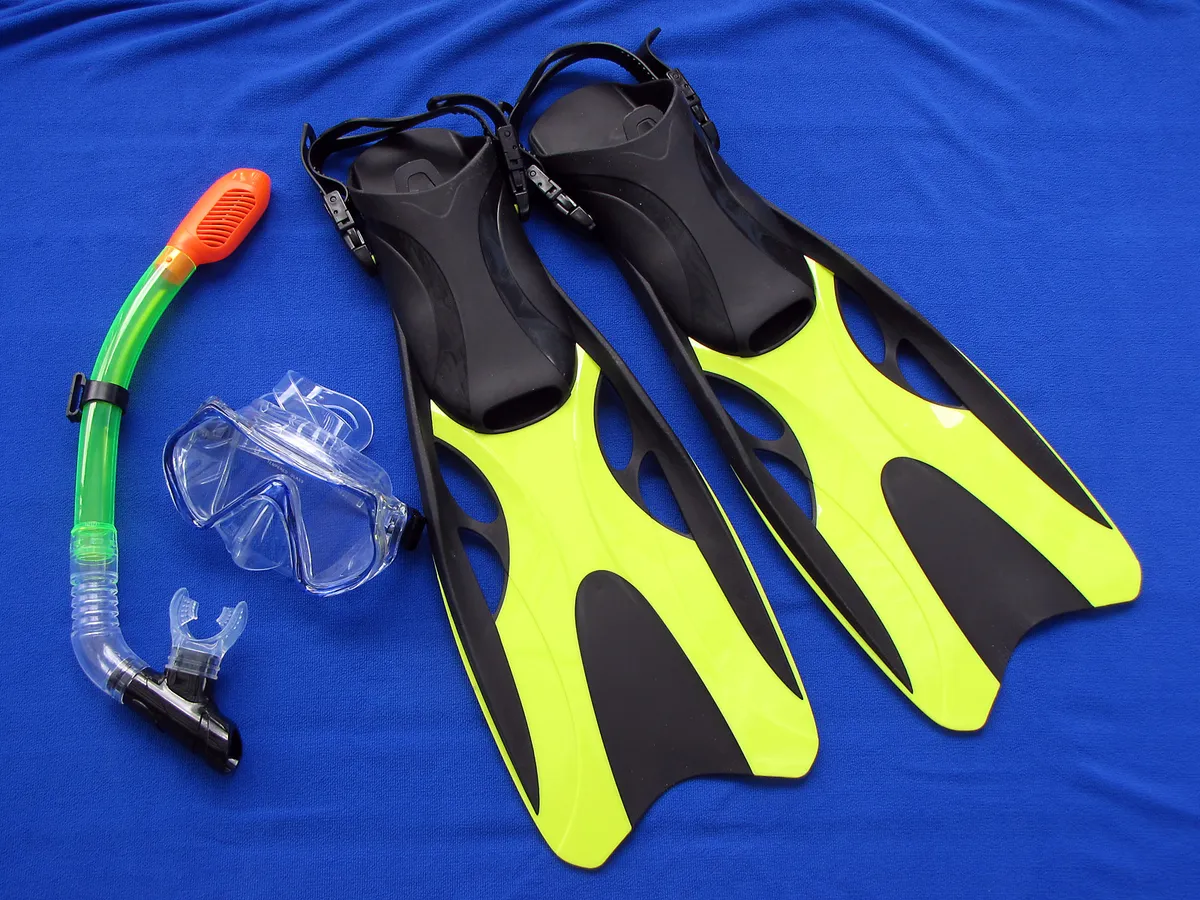
The core kit: mask, snorkel, fins - the boats carry basics, but your own mask seals where your face lives. Photo: Wikimedia Commons (CC0), attribution in caption.
Quick answer Three non-negotiables, three cheap upgrades, and the two items that ruin days when skipped
The non-negotiables for any Naxos boat trip: swimwear worn under clothes (there is no changing room beyond a towel-huddle at the stern), a towel, and reef-safe sunscreen that survives seawater. The cheap upgrades that reviews keep discovering: a dry layer for the return leg (wet swimwear plus meltemi wind is genuinely cold), water shoes for pebble landings and cave rocks, and cash in small notes for the Koufonisia cafes. The two skips that ruin days: no hat (the Aegean sun reflects off water and white decks) and no dry bag for phones - though the Panermos cave trip sends crew photos free. Full seasonal notes below; every boat in Naxos boat tours states its own bring-list too.
Key takeaways
- Wear the swimwear on - board ready to swim; the first stop comes before anyone figures out a deck changing room.
- The dry layer is the most-forgotten item - and the one the cold 17:30 ride home rewards.
- Phones in a dry bag or zip pocket - or book the cave trip whose crew photographs the day free.
The Non-Negotiables
Swimwear, worn on. Board ready to swim. The boats' heads (toilets) are not changing rooms, the islands' cafes are not either, and the towel-huddle at the stern is a skill with a learning curve. Wear the suit; carry the dry clothes.
A towel. Only the all-inclusive catamaran promises one - every other listing's day begins and ends with your own. Quick-dry microfibre earns its place twice: it packs small and it stops dripping before the taverna.
Reef-safe sunscreen, high SPF. The Aegean sun arrives from above and returns from below - water glare and white decks compound every exposed minute. Apply before boarding, reapply after every swim, and choose reef-safe formulas: the Cyclades' swimming water is the product, and the Mediterranean's marine-stewardship mood is moving toward banning the rest.
A hat that straps. The wind takes unstrapped hats as a toll; the sun takes unhatted heads as payment. Swim-cap-style or chin-strap models survive the crossing.
Water. The boats serve water on most listings, but the bottle in your bag between stops is the one that prevents the 15:00 headache. One litre per person for a full day is the floor.
| Item | Why it rides at the top | If you forget it |
|---|---|---|
| Swimwear worn on | No changing room exists beyond a towel-huddle | A awkward stern-shuffle at stop one |
| Towel | Only the all-inclusive catamaran provides one | A salty, sandy afternoon |
| Reef-safe sunscreen (SPF 50) | Water glare plus white decks double the burn | The 15:00 headache and the evening glow |
| Strapped hat | The wind collects unstrapped hats as a toll | A new hat at the harbour kiosk |
| Water (1 L/person) | The gap between the boat's service and the sun | The 15:00 slump |
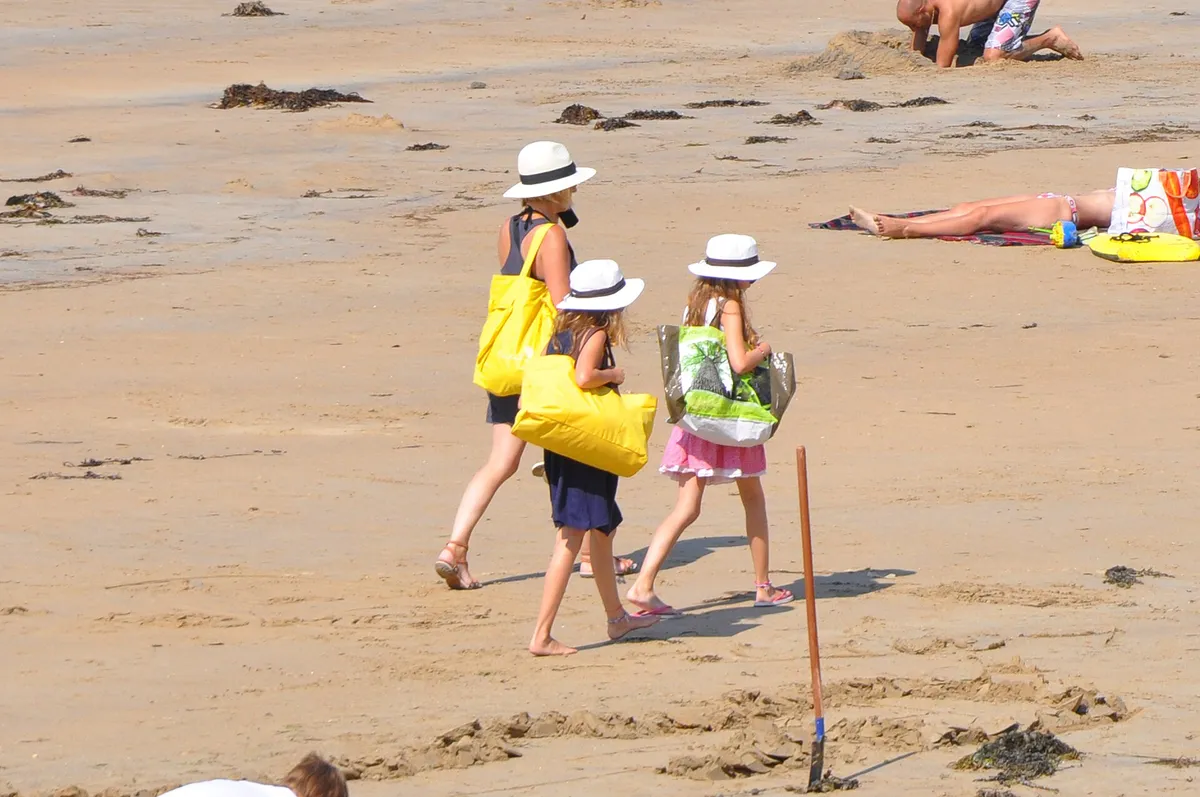
Hats on parade - the wind takes unstrapped ones as a toll. Strap-attached or swim-cap styles survive the crossing. Photo: Wikimedia Commons (CC BY-SA), attribution in caption.
Sun Protection That Survives a Force-4 Deck
Deck sun protection is a different sport from beach sun protection, because the deck moves and the water reflects:
Stick and cream, not spray. Spray sunscreen on a moving deck mostly dresses the wind; sticks cover faces and shoulders without the airborne waste, and a cream tube lives in the dry bag between swims.
UV rash vests for the long days. Families discovered this first: a UPF shirt on children (and fair adults) halves the reapplication wars and covers the back that the mirror never sees burning. The kids' packing guide makes them standard issue.
Lips and eyes. SPF lip balm is the item every review forgets until the evening; polarised sunglasses cut the water glare that fatigues eyes by the third stop - with a strap, because the wind collects those too.
The timing rule that beats every product: the first application happens before boarding, in the room, on dry skin. The second happens at the first swim exit. After that, after every swim - the Aegean's salt and the towel both conspire against the morning coat.
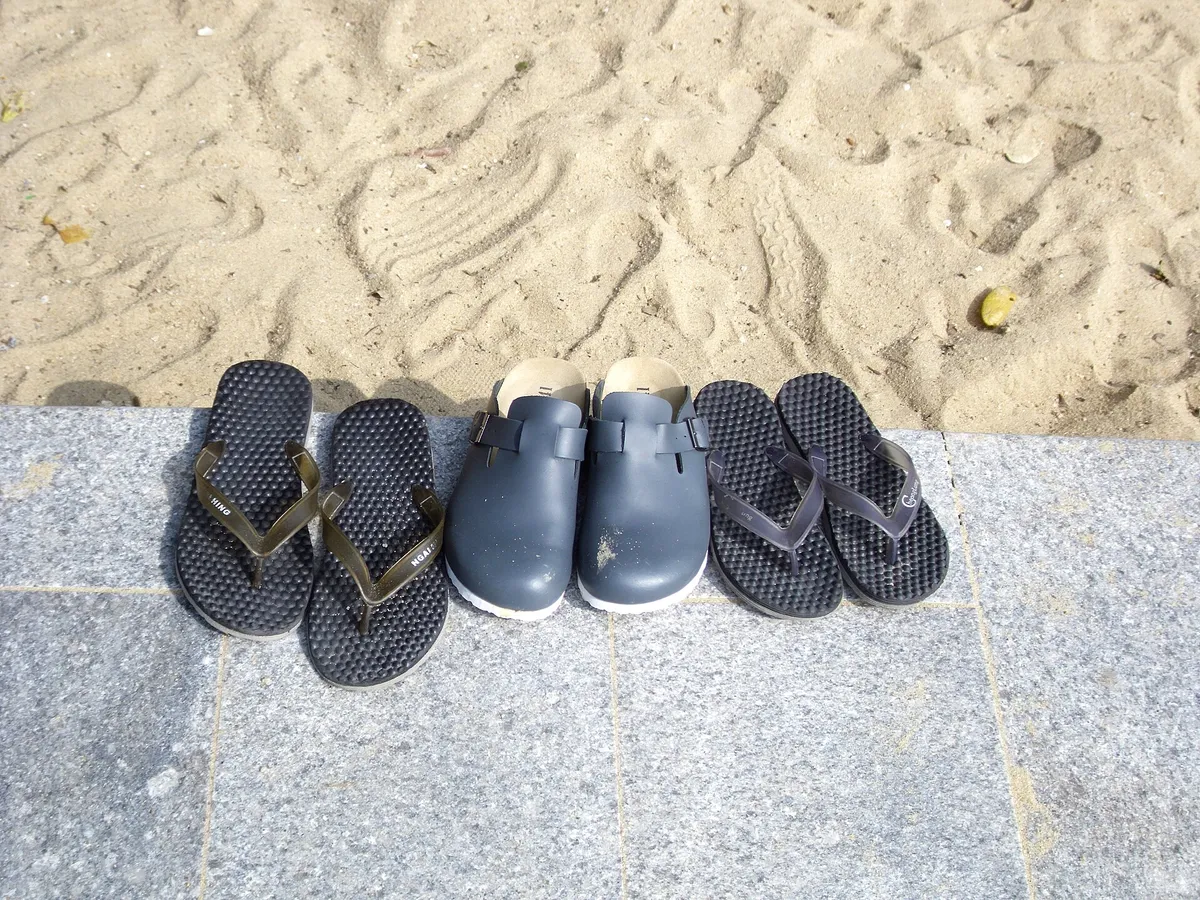
Shore footwear: sandals for the quay, and proper water shoes in the bag for the pebble coves and cave rocks. Photo: Wikimedia Commons (CC BY-SA), attribution in caption.
Shoes, Layers and the Cold Ride Home
Water shoes, not just flip-flops. The Koufonisia island landings, the pebble pockets at swim stops and the rock at the cave mouth all reward a shoe that stays on in water and grips wet stone. Dive socks or neoprene shoes pack flat and end the hobbly-beach-walk genre; flip-flops ride in the bag.
The dry layer - the list's most-forgotten hero. The return legs of the full-day boats run into the day's strongest wind, and a body in wet swimwear at 17 knots learns what wind chill means. A light long-sleeve - or the proverbial dry T-shirt - converts the ride home from endurance to sienna-gold evening. Reviews of the sailing days say it in every windy week: "bring a warm layer".
A light windbreaker for the meltemi months (July-September), doubling as the pillow on the return.
One dry set of clothes for the trip's end - car, bus or taverna, nobody wants the story told in damp denim. Stage it with the parking or the hotel bag, not on the boat.
Cash, Phones and Dry Bags
Cash in small notes. The Koufonisia cafe hour, the Iraklia taverna stop, the island gelato economy - all run on cash by temperament; the harbour ATM queues at noon are a real phenomenon. Twenty-euro notes split into fives are the day's diplomacy.
Phones in a dry bag or zip pocket. Salt spray, sand and the swim-ladder logistics are a phone's triple threat. A cheap dry bag - the pouch class, not the expedition duffel - covers the camera duties; a zip-lock does the job at a pinch. The exception worth booking around: the Panermos cave trip sends the crew's photos and video free, which is the day's best included souvenir in the comparison.
A dry bag for the group's valuables - wallets, keys, the spare phone - stowed in the boat's shade rather than the beach line.
Power bank only for the photo-heavy days; most boats have no charging points, and a dying phone at the cave is a first-world tragedy with a view.
The boring documents: booking confirmations offline (marina wifi is theoretical), ID for the platform's check-in, and the card that booked - platforms occasionally glance at it.
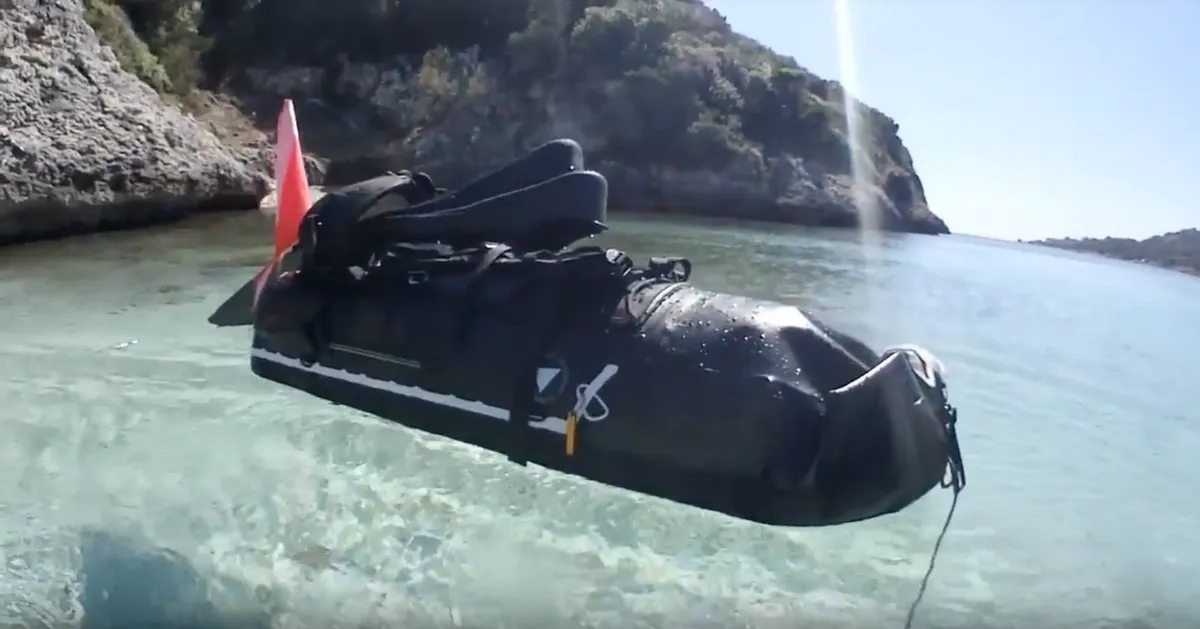
The dry bag doing its job: floating gear in a cove, sand-free and salt-free. The cheapest insurance on any boat day. Photo: Wikimedia Commons (CC BY-SA), attribution in caption.
What to Leave at the Hotel
Drones. Banned on the shared boats and unwelcome everywhere near swimmers; the cave's mouth is a no-fly zone by custom and the crews will say so.
Your own glass bottles. Broken glass on a wooden deck is the one accident every operator fears; the bars and cafes handle the drinks trade.
Inflatable pool toys and full-size fins for beginners. Pool inflatables drift, block ladders and insult the swim-stop etiquette; the boats provide fins sized to feet.
Jewellery and the second wallet. Salt water finds rings; decks find dropped wallets. The day's economy runs on cash in a dry bag.
The suitcase mindset. Deck space is communal and finite - one soft bag per person, no wheels (wheels and gangways are enemies), and anything you would grieve overboard stays home. The trip's emotional range is swim-sun-siesta; the packing list that serves it fits in a beach tote.
Season Variations: July vs October
The list shifts a little at each end of the season:
July-August additions: the UV rash vest earns its slot (the sun at its peak and the decks at their fullest); the water bottle count goes up; and the dry layer matters more, not less - the meltemi's peak makes the return legs genuinely cool. Snorkel gear ships standard on the boats but your own mask seals better on the day's third swim.
Shoulder-season swaps (May, October): the warm top becomes a proper fleece for the crossings; the swim window narrows to the midday stops so the towel earns a bigger role; and the sunset sail becomes a two-layer evening even for the brave. The sea in late September is warmer than in June - the year's best swimming arrives disguised as autumn.
The constant: everything on the core list stays in the bag all season - the Aegean's sun and salt run April to October without a day off.
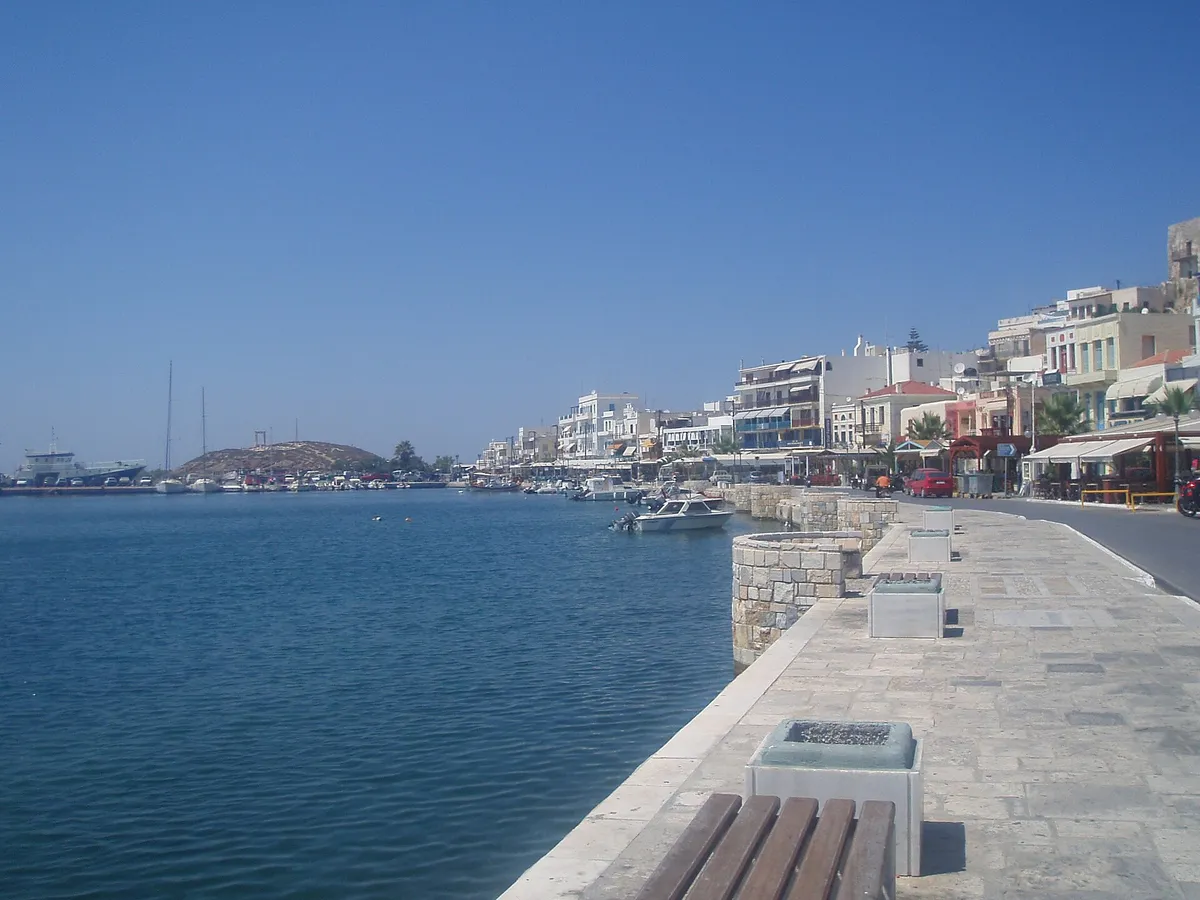
Where the list gets used: a Cycladic quay, boats moored, the day assembling itself at the water's edge. Photo: Wikimedia Commons (CC BY-SA), attribution in caption.
The Five-Line Method: Packing by the Day's Shape
Different boat days eat different bags; the list compresses to five lines once the day's shape is known:
The two-hour cave run: swimwear on, towel, one dry bag, sandals, cash. The boat carries the rest - wine, aids, photos. The lightest bag of the holiday.
The full-day island cruise: the core list plus the dry layer, snorkel mask, island cash and the snack kit. Soft bag only; the deck stows it under the bench.
The catamaran day: the core list minus the towel (it is included), plus the warm layer the reviews keep prescribing and the tip envelope.
The sunset sail: the evening's clothes with swimwear underneath, one towel, the charged phone for the Portara, and the bottle decision made before boarding.
The Delos history day: walking shoes, hat, high-SPF, two litres of water, site money - and no swim kit at all. The packing list that proves the rule: read the day, then read the bag.
The meta-rule the method encodes: pack for the itinerary's specifics, not for boats in general - and every listing's own inclusions are one card-click away in the Naxos boat tours table.
Seasickness Kit: What Actually Works
The Aegean's daily build makes this the most-read section for first-time bookers; the evidence-backed shortlist:
The tablet, pre-boarding. Dimenhydrinate-class tablets taken 30-60 minutes before boarding remain the reviews' gold standard; drowsiness is the trade, mornings are when it does not matter. Dose children by the packet, not by optimism.
The acupressure bands. Evidence-mixed, side-effect-free - and consistently reported as 'took the edge off'. On a family boat, the placebo is crew-sized and welcome.
Ginger, in any form. Sweets, tea, capsules - the studies wobble, the sailors do not. A tin of ginger sweets lives in every Greek deck bag for a reason.
The behavioural kit: amidships-aft seating, eyes on the horizon (not the phone), fresh air over cabins, and small sips of water. The first swim stop resets most stomachs - one more argument for morning departures.
And the honest hierarchy: the short two-hour trips and the stable catamarans remove the exposure; no kit beats not needing one. Book the sea-sick prone on the hull that suits them, then pack the kit anyway.
The Eco Kit: Leaving the Water as You Found It
The Cyclades' swimming water is the product everyone on the boat is buying; the eco kit is how the industry and its customers keep it that way:
Reef-safe sunscreen, genuinely. The marine-toxicity conversation has reached Greek pharmacy shelves: the zinc-oxide formulas cost a euro more and wash off without the legacy. The boats increasingly sell only these - bring your own and skip the premium.
A bag for your rubbish. The islands' bins are seasonal and the boats' are small; a folded carrier bag in the beach tote ends the wrapper-on-the-deck genre and the micro-rubbish at the swim stops.
No souvenirs from the water. Shells, sea-urchins, pieces of the cave: the taking is small, the aggregate is the erosion the crews already document. Photographs are the legal takeaway, and the cave trip's free photo service makes that literal.
The refillable bottle. The boats serve water; the refill ritual saves a plastic fleet per season per boat.
And the anchoring awareness that belongs to the crews, not the guests - which is why the licensed boats matter: the meadows of posidonia under the Cycladic shallows are the reason the water is that colour, and the crews anchor to protect them. It is one more line on the side of booking the licensed listing over the informal one.
The Boat-Bag Inventory: One Soft Bag, Checked Twice
The full-day cruise is the packing benchmark; here is the bag in checklist order, top to bottom:
Worn, not packed: swimwear, the strapped hat, sunscreen's first coat, the rash vest in high summer.
The towel roll: quick-dry towel, and the dry layer rolled inside it - one bundle, one hand.
The dry bag: phones, wallets, keys, booking confirmation screenshot, the spare base layer. Zip it at the beach; reopen it at the taverna.
The food pocket: water bottle (a litre), the snack kit - crackers, fruit, the ginger sweets for the meltemi hour. The boat feeds lunch; this pocket owns the gaps.
The small print: cash in fives, the card that booked, lip balm, the cheap sunglasses with the strap.
Left at the hotel: everything that would ruin the day overboard - the second paragraph of the leave-at-home list has the full roll of shame.
The bag that results fits under a bench, survives a swim stop, and walks into a taverna at 18:30 without apology - which is the whole test of a boat bag done right.
Packing for the Delos History Day: the No-Swim Variant
The Delos-Mykonos day breaks the packing rules in satisfying ways:
Leave the swim kit. No swim stops means the towel stays home, the dry layer is replaced by walking comfort, and the bag halves. What replaces them: grippy walking shoes (Delos is marble and rubble), a brimmed hat with a real brim, and two litres of water - the site is shadeless and the Cycladic sun does not care about your itinerary.
Site money in a reachable pocket. The Delos ticket is bought at the gate - official rates on odap.gr - and the morning queue rewards a wallet that does not require excavation.
The picnic decision. Delos sells snacks at best; Mykonos sells lunches at Mykonos prices. A bakery breakfast in Naxos plus a packed lunch is the local move, and the boat's deck eats it happily on the crossing.
And the camera logic inverts: no underwater case needed; a charged battery and the wide angle are the day's kit - the lions' terrace and the theatre quarter are the reasons phones exist.
The result is the lightest boat bag of the holiday for the heaviest day of walking - the packing list's proof that reading the listing comes before reading any list.
After the Boat: the Quay-Bag Basics
The day does not end at the mooring, and three items earn their keep in the last hundred metres:
The dry set of clothes - staged in the car, the hotel bag or the quay locker - converts the salt-and-wind arrival into an evening. The taverna at the harbour has seen every version; the dry-shirt version gets the better table.
The plastic bag for wet kit. The swimsuit and towel that return home damp will flavour a suitcase for days; a folded carrier bag isolates the evidence and costs nothing.
Water and the walk-home snack. The salt headache is a hydration event; the bottle in the car beats the kiosk queue at six in the evening, and the island's bakeries close early enough to reward the morning planner one final time.
And the habit that ends the season well: a five-second scan of the deck and the quay for your family's leavings - hats, towels, one flip-flop. The crews find most things; the reviews suggest they prefer finding them before the next morning's boarding.
Questions About Packing
What are the most important items to bring on a boat trip?
Swimwear worn on, a towel, and high-SPF reef-safe sunscreen - the three that appear in every honest packing conversation. The two whose absence ruins specific hours: the dry layer (the windy ride home) and the dry bag (the phone at the swim stop). Everything else is optimisation.
What should you not bring on a boat?
Drones (banned on shared boats), glass bottles (deck hazard), inflatable pool toys (ladder-blocking, etiquette-breaking), jewellery you would hate to lose to the Aegean, and wheeled luggage - one soft bag per person is the deck's social contract. The full leave-at-home list explains each.
What do you wear in Naxos for a boat day?
Swimwear under a light cover-up, a strapped hat, water shoes or flip-flops that come off, and the dry long-sleeve in the bag for the ride home. For the sunset sail, dress for dinner with the swim kit underneath - the evening version of the same logic.
What should I not miss in Naxos?
Off the boats: the Portara at sunset, the west-coast beach line, the mountain villages under Zas, and a taverna lunch that runs long. On them: the Koufonisia swim stops and the Rina cave - Naxos boat tours, the whole catalog, cover both between $33 and $177.
Should I bring snorkel gear or rely on the boat?
The boats carry serviceable basics and the Naxos boat tours compared here include gear in the fare - bring your own mask if fit matters to you, because a leaking mask is the difference between a swim stop and a splash. Fins are the first thing to leave home unless the day is a dedicated snorkelling trip.